 Datanami
 EnterpriseAI
 HPCwire Japan
 QCwire
 HPC & AI Wall Street


MLCommons Launches New AI Safety Benchmark Initiative
MLCommons, organizer of the popular MLPerf benchmarking exercises (training and inference), is starting a new effort to benchmark AI Safety, one of the most pressing needs and hurdles to widespread […]

Lenovo AI Solutions Streamline AI Implementation
With the latest boom in Artificial intelligence (AI) technology, organizations are positioned to achieve goals and tackle issues they previously would not have been able to like unlocking new insights […]
Sponsored Content by Lenovo

HPCwire’s 2024 People to Watch
Find out which 12 HPC luminaries are being recognized this year for driving innovation within their particular fields.

Empowering High-Performance Computing for Artificial Intelligence
April 19, 2024
Artificial intelligence (AI) presents some of the most challenging demands in information technology, especially concerning computing power and data movement. As a result of these challenges, high-performance computing Read more…

2024 Winter Classic: Texas Two Step
April 18, 2024
Texas Tech University. Their middle name is ‘tech’, so it’s no surprise that they’ve been fielding not one, but two teams in the last three Winter Classic cluster competitions. Their teams, dubbed Matador and Red Read more…
2024 Winter Classic: The Return of Team Fayetteville
April 18, 2024
Hailing from Fayetteville, NC, Fayetteville State University stayed under the radar in their first Winter Classic competition in 2022. Solid students for sure, but not a lot of HPC experience. All good. They didn’t Read more…

2024 Winter Classic: Meet Team Morehouse
April 17, 2024
Morehouse College? The university is well-known for their long list of illustrious graduates, the rigor of their academics, and the quality of the instruction. They were one of the first schools to sign up for the Winter Read more…

Quantinuum Reports 99.9% 2-Qubit Gate Fidelity, Caps Eventful 2 Months
April 16, 2024
March and April have been good months for Quantinuum, which today released a blog announcing the ion trap quantum computer specialist has achieved a 99.9% (three nines) two-qubit gate fidelity on its H1 system. The lates Read more…

Mystery Solved: Intel’s Former HPC Chief Now Running Software Engineering Group
April 15, 2024
Last year, Jeff McVeigh, Intel's readily available leader of the high-performance computing group, suddenly went silent, with no interviews granted or appearances at press conferences. It led to questions -- what's Read more…

Exciting Updates From Stanford HAI’s Seventh Annual AI Index Report
April 15, 2024
As the AI revolution marches on, it is vital to continually reassess how this technology is reshaping our world. To that end, researchers at Stanford’s Instit Read more…

Intel’s Vision Advantage: Chips Are Available Off-the-Shelf
April 11, 2024
The chip market is facing a crisis: chip development is now concentrated in the hands of the few. A confluence of events this week reminded us how few chips Read more…

The VC View: Quantonation’s Deep Dive into Funding Quantum Start-ups
April 11, 2024
Yesterday Quantonation — which promotes itself as a one-of-a-kind venture capital (VC) company specializing in quantum science and deep physics — announce Read more…

Nvidia’s GTC Is the New Intel IDF
April 9, 2024
After many years, Nvidia's GPU Technology Conference (GTC) was back in person and has become the conference for those who care about semiconductors and AI. I Read more…

Google Announces Homegrown ARM-based CPUs
April 9, 2024
Google sprang a surprise at the ongoing Google Next Cloud conference by introducing its own ARM-based CPU called Axion, which will be offered to customers in it Read more…

Computational Chemistry Needs To Be Sustainable, Too
April 8, 2024
A diverse group of computational chemists is encouraging the research community to embrace a sustainable software ecosystem. That's the message behind a recent Read more…

Hyperion Research: Eleven HPC Predictions for 2024
April 4, 2024
HPCwire is happy to announce a new series with Hyperion Research - a fact-based market research firm focusing on the HPC market. In addition to providing mark Read more…

Google Making Major Changes in AI Operations to Pull in Cash from Gemini
April 4, 2024
Over the last week, Google has made some under-the-radar changes, including appointing a new leader for AI development, which suggests the company is taking its Read more…
Nvidia H100: Are 550,000 GPUs Enough for This Year?
August 17, 2023
The GPU Squeeze continues to place a premium on Nvidia H100 GPUs. In a recent Financial Times article, Nvidia reports that it expects to ship 550,000 of its lat Read more…

Synopsys Eats Ansys: Does HPC Get Indigestion?
February 8, 2024
Recently, it was announced that Synopsys is buying HPC tool developer Ansys. Started in Pittsburgh, Pa., in 1970 as Swanson Analysis Systems, Inc. (SASI) by John Swanson (and eventually renamed), Ansys serves the CAE (Computer Aided Engineering)/multiphysics engineering simulation market. Read more…

Intel’s Server and PC Chip Development Will Blur After 2025
January 15, 2024
Intel's dealing with much more than chip rivals breathing down its neck; it is simultaneously integrating a bevy of new technologies such as chiplets, artificia Read more…
Choosing the Right GPU for LLM Inference and Training
December 11, 2023
Accelerating the training and inference processes of deep learning models is crucial for unleashing their true potential and NVIDIA GPUs have emerged as a game- Read more…

Baidu Exits Quantum, Closely Following Alibaba’s Earlier Move
January 5, 2024
Reuters reported this week that Baidu, China’s giant e-commerce and services provider, is exiting the quantum computing development arena. Reuters reported � Read more…
Comparing NVIDIA A100 and NVIDIA L40S: Which GPU is Ideal for AI and Graphics-Intensive Workloads?
October 30, 2023
With long lead times for the NVIDIA H100 and A100 GPUs, many organizations are looking at the new NVIDIA L40S GPU, which it’s a new GPU optimized for AI and g Read more…

Google Addresses the Mysteries of Its Hypercomputer
December 28, 2023
When Google launched its Hypercomputer earlier this month (December 2023), the first reaction was, "Say what?" It turns out that the Hypercomputer is Google's t Read more…
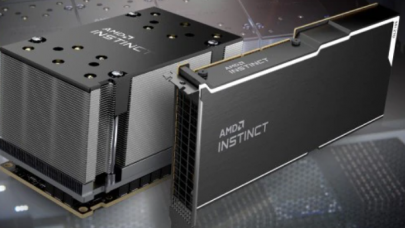
How AMD May Get Across the CUDA Moat
October 5, 2023
When discussing GenAI, the term "GPU" almost always enters the conversation and the topic often moves toward performance and access. Interestingly, the word "GPU" is assumed to mean "Nvidia" products. (As an aside, the popular Nvidia hardware used in GenAI are not technically... Read more…












Meta’s Zuckerberg Puts Its AI Future in the Hands of 600,000 GPUs
January 25, 2024
In under two minutes, Meta's CEO, Mark Zuckerberg, laid out the company's AI plans, which included a plan to build an artificial intelligence system with the eq Read more…

China Is All In on a RISC-V Future
January 8, 2024
The state of RISC-V in China was discussed in a recent report released by the Jamestown Foundation, a Washington, D.C.-based think tank. The report, entitled "E Read more…
AMD’s Horsepower-packed MI300X GPU Beats Nvidia’s Upcoming H200
December 7, 2023
AMD and Nvidia are locked in an AI performance battle – much like the gaming GPU performance clash the companies have waged for decades. AMD has claimed it Read more…

DoD Takes a Long View of Quantum Computing
December 19, 2023
Given the large sums tied to expensive weapon systems – think $100-million-plus per F-35 fighter – it’s easy to forget the U.S. Department of Defense is a Read more…
Nvidia’s New Blackwell GPU Can Train AI Models with Trillions of Parameters
March 18, 2024
Nvidia's latest and fastest GPU, codenamed Blackwell, is here and will underpin the company's AI plans this year. The chip offers performance improvements from Read more…
Eyes on the Quantum Prize – D-Wave Says its Time is Now
January 30, 2024
Early quantum computing pioneer D-Wave again asserted – that at least for D-Wave – the commercial quantum era has begun. Speaking at its first in-person Ana Read more…

GenAI Having Major Impact on Data Culture, Survey Says
February 21, 2024
While 2023 was the year of GenAI, the adoption rates for GenAI did not match expectations. Most organizations are continuing to invest in GenAI but are yet to Read more…

The GenAI Datacenter Squeeze Is Here
February 1, 2024
The immediate effect of the GenAI GPU Squeeze was to reduce availability, either direct purchase or cloud access, increase cost, and push demand through the roof. A secondary issue has been developing over the last several years. Even though your organization secured several racks... Read more…

- Click Here for More Headlines
Whitepaper
Transforming Industrial and Automotive Manufacturing
In this era, expansion in digital infrastructure capacity is inevitable. Parallel to this, climate change consciousness is also rising, making sustainability a mandatory part of the organization’s functioning. As computing workloads such as AI and HPC continue to surge, so does the energy consumption, posing environmental woes. IT departments within organizations have a crucial role in combating this challenge. They can significantly drive sustainable practices by influencing newer technologies and process adoption that aid in mitigating the effects of climate change.
While buying more sustainable IT solutions is an option, partnering with IT solutions providers, such and Lenovo and Intel, who are committed to sustainability and aiding customers in executing sustainability strategies is likely to be more impactful.
Learn how Lenovo and Intel, through their partnership, are strongly positioned to address this need with their innovations driving energy efficiency and environmental stewardship.
Download Now
Sponsored by Lenovo
Whitepaper
How Direct Liquid Cooling Improves Data Center Energy Efficiency
Data centers are experiencing increasing power consumption, space constraints and cooling demands due to the unprecedented computing power required by today’s chips and servers. HVAC cooling systems consume approximately 40% of a data center’s electricity. These systems traditionally use air conditioning, air handling and fans to cool the data center facility and IT equipment, ultimately resulting in high energy consumption and high carbon emissions. Data centers are moving to direct liquid cooled (DLC) systems to improve cooling efficiency thus lowering their PUE, operating expenses (OPEX) and carbon footprint.
This paper describes how CoolIT Systems (CoolIT) meets the need for improved energy efficiency in data centers and includes case studies that show how CoolIT’s DLC solutions improve energy efficiency, increase rack density, lower OPEX, and enable sustainability programs. CoolIT is the global market and innovation leader in scalable DLC solutions for the world’s most demanding computing environments. CoolIT’s end-to-end solutions meet the rising demand in cooling and the rising demand for energy efficiency.
Download Now
Sponsored by CoolIT
Advanced Scale Career Development & Workforce Enhancement Center
Featured Advanced Scale Jobs:
HPCwire Resource Library
HPCwire Product Showcase

© 2024 HPCwire. All Rights Reserved. A Tabor Communications Publication
HPCwire is a registered trademark of Tabor Communications, Inc. Use of this site is governed by our Terms of Use and Privacy Policy.
Reproduction in whole or in part in any form or medium without express written permission of Tabor Communications, Inc. is prohibited.