Datanami
 EnterpriseAI
 HPCwire Japan
 QCwire
 HPC & AI Wall Street
With all the SC09 news being broadcast this week, I neglected to cover our very own 2009 HPCwire Readers’ and Editors’ Choice Awards. As per our annual tradition, we recognize some of the biggest success stories in the HPC community over the past 12 months and announce them at the annual Supercomputing Conference. To be honest, given the economic turmoil over the last year, anyone who managed to survive 2009 intact deserves a medal.
In any case, there are too many HPCwire awards to cover in this short blog, so I’ll just point you to our press release here. However, it might be worthwhile to review our “Top 5 Vendors to Watch” category, especially considering we probably just got our last look at them for the year at SC09.
So who will be getting that extra attention in 2010? The readers picked SGI, Cray, IBM, Sun Microsystems, and Dell, while the HPCwire editors chose Microsoft, SGI, NVIDIA, Convey Computer, and Sun Microsystems. Now not all of these were chosen because we expect them to set the HPC world on fire; some were singled out because they have big challenges ahead and are worth keeping an eye on for that reason alone. SGI and Sun fall into the latter category.
SGI’s fundamental challenge is to start turning in profitable quarters. The company just launched its Altix Ultraviolet line, in the hope of reinvorgorating its shared memory offerings, which heretofore were strictly Itanium-based (and were not exactly flying off the shelves). The better price-performance of the UV line has a lot more potential for serious sales, so it may offer the company a potent new revenue stream. Here’s hoping.
Thanks to the anti-trust nervousness of the European Commission, the $7 billion Oracle-Sun deal is in limbo, adding a layer of uncertainty on top of what many consider a problematic merger. Despite general reassurances from Mr. Ellision, Sun HPC customers are wondering if the company’s high performance computing portfolio will survive unscathed.
Given all the recent consolidation in the industry, Dell may take the opportunity to make a bigger play in HPC. With clearly a volume strategy in mind, we should expect the company to continue to gather partnerships to offer the widest range of cluster products possible. A key HPC vendor acquisition would shake things up, but don’t hold your breath.
While not yet a big player in the HPC market, Microsoft continues to press its home field advantage in the Windows ecosystem. With the beta releases of Visual Studio 2010, Excel 2010, and Windows HPC Server 2008 R2, Microsoft is clearly signaling that it intends to make more and more of its software portfolio HPC-friendly.
With its CPU-FPGA hybrid architecture, Convey Computer has developed one of the most compelling HPC designs in years. It still, however, has to convince a conservative HPC user community of the value proposition. With some customer wins under its belt and a couple of partners in tow, Convey may be about to reach escape velocity.
Cray and IBM always seems to show up on the Vendors to Watch list. And why not? These are the two companies usually duking it out for the top spots on the TOP500. More importantly, with Cray’s CX-1 deskside cluster line and its mid-range XT variant, the company is trying to pick some spots where IBM and other HPC OEMs have a lighter footprint.
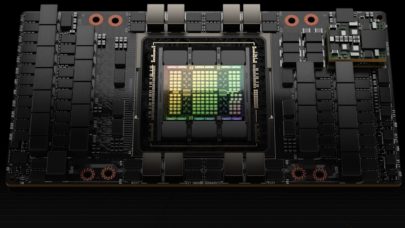
Finally NVIDIA. With Fermi in the pipeline, 2010 could be a breakout year for the company’s HPC aspirations. The past three years spent seeding, watering and fertilizing the CUDA ecosystem may be about to pay off.