Datanami
 EnterpriseAI
 HPCwire Japan
 QCwire
 HPC & AI Wall Street
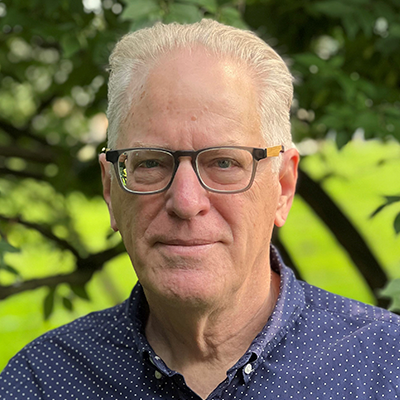
The naming of Michael Norman as director of the San Diego Supercomputer Center (SDSC) last week was long overdue. SDSC has been without an official director for more than 14 months, with Norman filling the spot as the interim head since last July. The appointment could mark something of a comeback for the center, which has not only gone director-less during this time, but has been operating without a high-end supercomputer as well.
DataStar, an aged 15-teraflop IBM P690 system was retired in October of 2008 and the center’s relatively small Blue Gene/L machine was mothballed in June 2009. But Trestles, a new 100-teraflop supercomputer funded by the NSF, is scheduled to be up and running before the end of the year. And with the addition of Gordon, a 245-teraflop supercomputer slated for deployment in mid-2011, SDSC will again be a relatively FLOPS-happy place.
You might say that our FLOPS profile looked like the Dow Jones,” laughed Norman. “It really swooned in 2008 and 2009. With the Trestles system coming at the end of 2010, we’ll be back on the board.”
A Little History
Norman, a computational astrophysicist, got his start at Lawrence Livermore in the 1970s, where he was able to combine his love of astronomy (his major at Caltech) with his interest in all things computational. “And then basically, I was a gypsy, going after supercomputer cycles where ever I could find them,” said Norman.
After his stint at Livermore, Norman did a four-year tour (1980 – 1984) at the Max Planck institute for Astrophysics, owners of the first Cray 1 system in Western Europe. It was during his time at Max Planck when he collaborated heavily with Larry Smarr, currently UC San Diego’s director of Calit2.
“I have worked closely with Mike for over 30 years, since he was a grad student at Livermore,” said Smarr. “He brings a wealth of experience from working at multiple national and international supercomputer centers, as well as being a hands-on pioneer in computational astrophysics and cosmology.”
It was also during this period at Max Planck that he and Smarr conceived of the idea of the National Center for Supercomputing Applications (NCSA). Two years after Norman had left the the institute, NCSA was born. But in the interim Norman went to Los Alamos to work as a staff scientist, before rejoining Smarr at NCSA in 1986. He stayed there for 14 years, before coming to San Diego.
There, he got involved with SDSC, first as a researcher from the UC San Diego physics department, then as a member of the center’s Executive Committee. Toward the end of 2007, Norman jumped into the NSF funding fray to help SDSC win one of agency’s Track 2 supercomputer procurements. The first attempt was not successful, but the second one was, resulting in the award for the Gordon system, with Norman as the principle investigator. In the summer of 2009 Norman became the interim director of the center after Fran Berman relinquished her directorship, moving to Rensselaer Polytechnic Institute as the VP of Research.
Data-Centric Supercomputing
Norman’s ascendance at SDSC ratifies the center’s new focus on data-intensive supercomputing. He, more than anyone, wanted to make San Diego a place for HPC and HPD (high-performance data), a term that he coined to draw attention to the data-centric model. The idea is to support the whole scientific enterprise, and that requires a more highly integrated storage infrastructure supporting the supercomputers.
“There are these two cultures: the HPC culture and the culture of data-intensive science, or fourth paradigm, whatever you want to call it,” explained Norman. “They seem to be living in different worlds. I’m hoping to bring them together at SDSC.”
Part of that goal will be served by the upcoming Gordon supercomputer, which will feature a quarter of a petabyte of flash memory and virtual shared memory software. At 245 teraflops, the machine delivers only moderate performance by today’s elite supercomputing standards. But a lot of today’s applications are I/O bound, rather than compute bound, and would really prefer to have their big datasets sitting in main memory. Since RAM is rather expensive, flash is turning out to be the next best thing. Because of its unique memory architecture, Gordon is expected to do exceeding well at dealing with terascale-sized databases.
The driver for all this is the so-called “data deluge,” which is flowing across multiple disciplines — in traditional technical computing areas such as physics, astronomy engineering, bioinformatics, and medicine, as well as in less traditional realms, such as social sciences, arts, and economics.
Terabyte streams coming from ocean observing sensors, astronomical CCD cameras, and genome sequencers are just a few examples of how data is outrunning the computing infrastructure. Some of these, like the astronomical data streams, can require their own dedicated supercomputer.
The problem is even more acute for genome sequencers. Genome biologists are accustomed to doing their work on a workstations, because that used to be perfectly adequate. But the throughput on these machines has increased so rapidly that sequencers have gone from generating gigabytes to terabytes in just a couple of years. Even bigger improvements on the horizon. “They’re really at sea right now,” said Norman, “and they’re realizing they can’t do this work in their labs anymore.”
The centerpiece of the data-intensive remodel at the SDSC will be something called Data Oasis, a very large scalable file store designed to serve multiple HPC clusters as well as data-intensive machines. Basically it’s an extensible disk farm that will have high connectivity through a very large 10 gigabit switch. From Norman’s perspective, this basically turns the datacenter inside out, with the compute machinery and data generators at the periphery and the data storage in the center.
Industry Partner Program Reboot
Once the new infrastructure gets in place, Norman hopes to revive the center’s industry partnership program. Since retiring their capacity supercomputers over the last couple of years, SDSC hasn’t been able to attract a lot of commercial collaborators. After DataStar was switched off, the center used internal funds to buy Triton, a 20-teraflop Appro cluster. According to Norman, they garnered a few industrial partners with that system, but it really doesn’t have the capacity to support a large program.
The Trestles supercomputer, true to its name, will act as bridge system, until the larger Gordon machine is installed next year. (Trestles, by the way, is also a the name of a famous surf break in San Diego.) Shell Oil is very interested in the Gordon architecture, said Norman. Currently, the oil company is employing Dash, a smaller flash memory-accelerated prototype of Gordon, for an undisclosed project, and they are hoping to grow that work once its more capable successor comes online.
According to Norman, they’re also active cultivating the biomedical informatics business, starting with work at the local USCD medical center. They intend to tap faculty working at the university’s School of Medicine to help build up some of this expertise, with the hope that this work could spill into commercial relationships.
Boutique Funding
With it’s data-centric focus, SDSC has chosen not to be part of the latest petaflop-to-exaflop race. While that gives the center an interesting niche, it’s generally at odds with the funding model the NSF uses to fund supercomputing nowadays. Tighter budgets have convinced the agency to spread the money in a more piecemeal way. So you might get money for a supercomputer, but not for the data store or the network infrastructure that’s needed by the whole facility. “In the old days when we had true supercomputer center funding, there was enough money to create an integrated environment,” explained Norman.
In that sense, the centers are no longer funded as such. They’re funded as places where the agency can plop down a resource. From Norman’s perspective, that’s not a workable long-term strategy for supercomputing centers. “It’s possible we’ll get back to a more sustainable model,” he said. “I certainly hope so.”