Datanami
 EnterpriseAI
 HPCwire Japan
 QCwire
 HPC & AI Wall Street
While NVIDIA has managed to capture the mindshare in the GPU computing space, especially in the high performance computing segment, AMD keeps plugging away. AMD’s Fusion processor/OpenCL strategy is its long-term answer to NVIDIA’s CUDA approach, but in the near-term, AMD is looking for other ways to follow NVIDIA’s lead into the GPU server market.
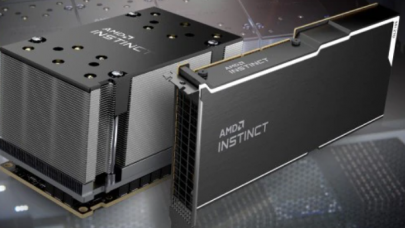
 This week AMD announced the FirePro V7800P, its first non-FireStream server GPU part. Unlike the compute-focused FireStreams, however, the new V7800P is designed to serve both graphics/visualization applications and GPU computing.
In particular, it supports Microsoft RemoteFX, a visualization technology for virtual desktop infrastructure (VDI). The idea is to serve up desktop visuals from clusters to various types of thin clients, relieving the local device of doing heavy-duty graphics. The advantage is that a single GPU can support the graphics (and audio) for multiple clients and do so at the price-power-performance efficiency of a datacenter. Microsoft has high hopes for RemoteFX and hopes to draw millions of users to the technology in 2012.
Not surprisingly, AMD would like to be a part of that — thus the FirePro V7800P. But since the device can also double as a GPU accelerator, V7800P-equipped servers can crunch on GPGPU applications when they’re not busy drawing pretty pictures for client devices. It’s easy to imagine a scenario where a GPU cluster would be driving desktop graphics during working hours and running HPC codes at nights and on weekends.
According to Mitch Furman, the senior product manager for AMD’s professional graphics products, the V7800P is essentially a superset of the FireStream 9350 product. While the latter part supports OpenCL and OpenGL, only FirePro supports the OpenGL optimization that are needed for serious CAD and DCC applications. And as mentioned before, only the FirePro card works with RemoteFX for VDI.
Compute-wise though, the two AMD graphics processors are equivalent, both encompassing the same GPU technology (Cypress), core count (1,440) and memory (2 GB). Like the 9350, the V7800P delivers about 2 single precision teraflops or 400 double precision gigaflops. The extra graphics support on the FirePro just makes it a two-for-one deal for the datacenter. “It’s really an IT management ease-of-use solution,” Furman told me.
 AMD didn’t invent the dual-use concept. NVIDIA introduced a graphics/visualization-capable Tesla part last year in the M2070Q, a variant of the M2070 with Quadro graphics features enabled (the Q stands for Quadro). Like the FirePro V7800P, the M2070Q is aimed at users who want to build an all-in-one visualization/compute cluster.
A number of OEMs picked up on the M2070Q including IBM, who is offering it with its iDataPlex dx360 M3 as a RemoteFX server that can also moonlight as a GPU computer. IBM literature says 84 of these servers, each with two M2070Qs, can support up to 1,000 users, or about six users per Tesla device, in a RemoteFX VDI environment.
Dell, on the other hand, opted for the FirePro V7800P in its dual-use GPU server offering. For this purpose, the company is using the new FirePro in their PowerEdge M610x blade. That’s a nice endorsement for AMD, especially when you consider that Dell offers the regular NVIDIA M2050 and M2070 modules in that same server for straight up GPU computing.
For visualization applications, and especially VDI, the AMD offering looks somewhat more attractive. According to Furman, the FirePro V7800P can support up to 16 users per card, as opposed to the six claimed for the IBM-M2070Q setup. (That’s for vanilla desktop graphics, not for things like HD Blue Ray streaming or 3D gaming.) That makes sense, given that the FirePro has about twice the raw graphics capability — as evidenced by its 2 teraflops of single-precision — compared to the Tesla part.
HPC-wise, the Tesla offering looks more compelling, with a slight edge over the FirePro part in double-precision performance (515 gigaflops versus 400 gigaflops), a substantial edge in memory capacity (6 GB versus 2 GB), and a huge advantage in its support for features like ECC memory, L1 and L2 caches, asynchronous data transfers, and concurrent kernels. All of that capability comes with a power penalty, however; the M2070Q chews up 225 watts, compared to the V7800P at a more modest 138 watts.
If you can live with some of the compute shortcomings, AMD’s offering is certainly priced to sell. With an MSRP of $1,249, the FirePro V7800P is less than half the cost of a M2070Q. The retail price for the more compute-endowed Tesla module is $5,000 and up, although presumably IBM and other OEMs are getting a better deal than that. The more attractive price and lower wattage could be the reasons Dell decided to go with the AMD part for its M610x blade.
Whether dual-use GPU server infrastructure catches on or not remains to be seen. The compute-loving FireStream and Tesla parts are cheaper than their dual-GPU counterparts, so if you don’t need to serve up graphics, the choice is obvious. The success of these GPUs will hinge on how important server-side visualization becomes, and if technologies like Microsoft’s RemoteFX get some traction.
“We’re definitely excited about putting graphics in the datacenter,” said Furman “We’ve put a lot of CPUs in there. Now we have a reason to put our GPUs in there as well.”