Datanami
 EnterpriseAI
 HPCwire Japan
 QCwire
 HPC & AI Wall Street
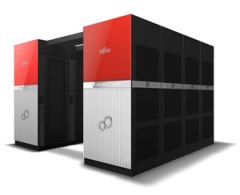 A week after launching the PRIMEHPC FX10, Fujitsu has announced that first installation of the new system will go to the Information Technology Center at the University of Tokyo. According to the press release, the 4,800-node supercomputer will deliver 1.13 petaflops peak when it boots up in April 2012.
The system’s intended use is to support scientists and engineers throughout Japan who depend on the center’s HPC resources for their research work in astrophysics, seismology, environmental modeling, earth science, energy, materials science, biology, fluid dynamics, and solid mechanics. Established in 1965, the Information Technology Center is used by more than 1,500 researchers inside and outside of the university. The new machine will also be used by the University of Tokyo’s graduate school to support its HPC programs.
As we reported last week, the PRIMEHPC FX10 is the next generation of Fujitsu’s famous K Computer, which is currently regarded as the most powerful supercomputer in the world. Although the K system has about 10 times the peak performance of the PRIMEHPC FX10 to be deployed at the University of Tokyo, the latter system has the newer technology.
 In particular, the CPU has been upgraded to Fujitsu’s new 16-core SPARC64 IXfx, which, at 236.5 peak gigaflops, delivers nearly twice the performance as of the K Computer’s SPARC64 VIIIfx. The new chip runs at 1.848 GHz and consume 110 watts, yielding about 2 gigaflops/watt. Memory bandwidth is a healthy 85 GB/second. The SPARC64 IXfx is built on 40nm process technology and contains approximately 1.87 billion transistors, which is nearly two and half times as many as its predecessor.
The remainder of the K Computer architecture, including the 6D Tofu interconnect, has been carried over to the PRIMEHPC FX10 system essentially unchanged. And since the new SPARC64 IXfx chip maintains backward compatibility with the previous generation, programmers can use PRIMEHPC systems to develop software for the K Computer. That’s likely to come in handy, especially as more systems are deployed. Cycles on the K machine at RIKEN are probably a bit too precious to be used for software development.
Fujitsu intends to sell 50 of the PRIMEHPC FX10 over the next three years — a rather ambitious pace. And although its first sale is domestic, the company is targeting these systems for worldwide distribution. Pricing on the PRIMEHPC FX10 supercomputers has not been publicly disclosed, although if you are interested in a petascale machine and aren’t married to x86 software, stop by the Fujitsu booth at the Supercomputing Conference (SC11) this week and see what they have to say.