Datanami
 EnterpriseAI
 HPCwire Japan
 QCwire
 HPC & AI Wall Street
Silicon Valley startup Green Platform Corporation has been promoting its vibration dampening solution for rack-based disk storage for a couple of years now. But with the increasing importance of “big data” applications, which places particular emphasis on performant I/O, the company is looking to tap into a $22 billion storage market that is still primarily based on vibration-prone spinning disks. In the process, the company has tweaked its strategy to offer what it calls a “Vibration Management System.”
 From Green Platform’s perspective, its opportunity aperture is growing not only because enterprise storage capacity is increasing by leaps and bounds, but also because the disk vibration problem is getting more acute with each subsequent generation of hard drive. The drives themselves are not getting any faster, but as disk capacity grows, the increased density of the media means the head positioning on the tracks becomes more sensitive to vibration — from the disk itself as well as neighboring disks, fans, power supplies, and ambient datacenter vibration. When the head can’t position itself properly on the track due to all this shaking, it has to reposition itself until it can properly execute the read or write, thereby degrading I/O performance.
Green Platform has run tests that indicate there is a significant drop in I/O throughput and latency in high-vibration environments. To mitigate that unfortunate behavior, the company developed a standard 42U, 19-inch rack enclosure based on a carbon-fiber composite designed to dissipate vibration. The rack shelves contain anti-vibration modules, although not every shelf will require one (i.e. the power-supply shelf). When the hard drives are slid into the modules, the composite material acts as a dampener, and is able to reduce vibration up to 1000-fold compared to traditional metal racks.
Larry Gordon, Green Platform’s VP of market development, says you should be able to get at least a 15 percent performance boost if you use their vibration dampening racks. And according to him, that’s on the conservative side. Gordon says they’ve demonstrated more than a 50 percent IOPS increase in a SAN environment with their anti-vibration racks and standard Hitachi storage gear.
The ROI story is that you can avoid over provisioning disks to compensate for the lost performance due to vibration. That saves not only the upfront costs of buying the extra storage, but operational costs associated with power, cooling, maintenance and system administration, not to mention optimizing datacenter real estate. Although Green Platform doesn’t yet have the data to back it up, they also believe their anti-vibration solution will improve system reliability, especially for cheaper drives.
According to the company, an initially outlay of $21,600 for their vibration dampening gear (accommodating 10 3U shelves) can save nearly $150,000 over three years. Those numbers are based on a 1/3 SAS and 2/3 SATA hardware mix and storage needs that are growing at a 30 percent annual clip. That 7X payback is based on the aforementioned 50 percent IOPS, but even much more conservative performance numbers should yield a respectable ROI.
Even with those numbers in hand, the company had trouble convincing customers they had enough of a vibration problem in their own datacenter to warrant a solution. So Green Platform repositioned itself as a service company, offering a Vibration Management System (VMS), which they sell as a subscription.
In doing so, Green Platform has cast itself as a datacenter infrastructure management company. Over the last couple of decades, datacenters have become so large and inefficient that a whole industry of datacenter analyst firms have come into being. “We’re part of that category,” says Gordon. Green Platform is selling the idea that vibration, just like temperature, needs to be continuously monitored to run a datacenter efficiently.
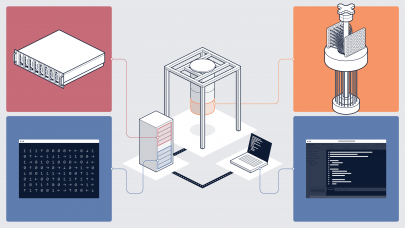
In a nutshell, the company’s VMS service measures a datacenter’s vibration problem by outfitting the existing hardware with sensors, mediating the vibration with the Green Platform dampening racks, and then monitoring the vibration on a continuous basis as conditions in the datacenter evolve. The vibration sensors are attached to the storage chassis at various points, and with the help of a performance tool, the system will determine how much performance is being lost to vibration and how much can be recovered. The results are collected in Green Platform’s own cloud-based system where users can access it remotely via a dashboard.
The initial monitoring is done over months to exercise various workloads and situations. For example, cooling fans that need to continuously run because of temperature or workload stress can have a huge impact on the vibration. The idea is to pinpoint the source of problem so the anti-vibration racks can be deployed judiciously. As the datacenter infrastructure grows, monitoring will make sure vibration is dampened at the right place. Also, system administrators can use the knowledge to implement operational changes that minimizes vibration across the facility.
Green Platform’s VMS service runs $1,500 per rack/month, which includes the rack dampening hardware. To generate interest, the company will offer their monitoring system with existing metal racks at no charge. Their hope is that once the customer sees how much performance is being lost, the anti-vibration racks will seem like a no-brainer.
According to Gordon, they think there is a $1 billion opportunity in vibration management to be had. That’s based on the belief that there is a $5 billion “vibration penalty” that users are currently paying for unbeknownst to them. Basically, Green Platform is saying for every dollar you spend on their solution, you can save 5 dollars on storage hardware and operational costs.
Of course, one can solve the vibration problem completely by switching to solid state disks. But SSDs are not expected to replace hard disks anytime soon. According to iSuppli Research, SSD shipments hit just 7.2 million units in 2010 versus 662 million units of hard drives. Analysts there maintain SSDs will not threaten hard drive dominance within the next five years, mainly due to the greater expense of flash memory. “Customers still care about cost per bit,” says Gordon.
The next step for Green Platform is to collect some proof points to bolster its story, so the company is actively looking for beta customers to give their solution a whirl. In general, any application that relies on native hard drive performance (is not cache- or compression-friendly) should be a candidate. That includes essentially all Hadoop cluster applications, HPC simulations and analytics, any I/O bound application, video streaming, and most workloads that use server virtualization. If you have such an application and think your storage is underperforming, the Green Platform solution might be worth a look.
Related Articles
Startup Takes Aim at Performance-Killing Vibration in Datacenter
GPC Announces Vibration Management System for Improving Storage Performance