Datanami
 EnterpriseAI
 HPCwire Japan
 QCwire
 HPC & AI Wall Street
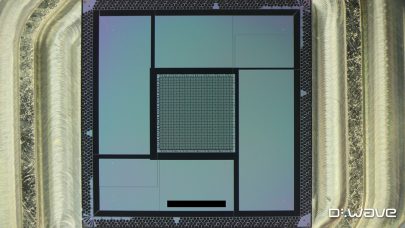
A team led by Dr. Michael Biercuk from the university’s School of Physics and ARC Center of Excellence for Engineered Quantum Systems, have created a quantum simulator consisting of a small crystal of 300 beryllium ions.
 In the 1980’s, Richard Feynmen received a Nobel Prize for explaining the potential of quantum computing. Since then, scientists have attempted to build a quantum computer and while none were successful, the Sydney-based team has surpassed previous attempts.
Modeling quantum computers on modern day systems has been largely ineffective, prompting researchers to physically build small quantum simulators like the one in Australia. A University of Sydney press release compares the simulator to studying a wing in order to understand how a plane functions.
Biercuk gave a high-level explanation in a video after the breakthrough, “This is a crystal that we build from the bottom up, atom by atom, where we trap and control individual atoms of beryllium inside what’s known as a penning trap.” He went on to explain that a penning trap is an instrument used to capture charged atoms.
The simulator is extremely small, the 300-atom crystal is shaped like a pancake measuring one atom thick and less than 1 millimeter in diameter. However, its expected computational power is far beyond current computing standards.
“The projected performance of this new experimental quantum simulator eclipses the current maximum capacity of any known computer by an astonishing 10 to the power of 80,” said Biercuk. “That is 1 followed by 80 zeros.”
In other words, a modern day computer would have to be the size of the known universe to match the simulator’s computational potential. The team is currently also testing spins in the field of quantum magnetism, which could lead to advances in the energy and life sciences domains.
Although the simulator lives in Australia, the work is the result of an international collaboration including researchers from the University of Sydney, Georgetown University, NC State, the Council for Scientific and Industrial Research in South Africa and the US National Institute of Standards and Technology.
Takeaway
Although this research marks an advance in the study of quantum computing, the introduction of the first functioning quantum computer is still a ways out. But a system with this kind of computational power could potentially solve many types of applications that even the most powerful conventional supercomputers would choke on.