Datanami
 EnterpriseAI
 HPCwire Japan
 QCwire
 HPC & AI Wall Street
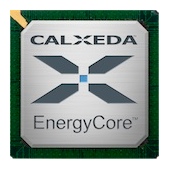
Dell announced last week the development of a second ARM-based server platform, which it is donating to the Apache Software Foundation for software development and application porting. The Dell “Zinc” server concept runs Calxeda’s ARM-based EnergyCore EXC-1000 processors.
 The “Zinc” ARM server follows the company’s “Copper” ARM server, which was announced in May. Low-power servers, or microservers as they’re also known, have been generating a lot of buzz in the datacenter and cloud space. Instead of the usual x86 chips, these servers rely on energy-efficient processors like the ones in cell phones and other mobile devices. For Web-era companies such as eBay and Amazon or even enterprise companies with large datacenters, microservers promise increased density and power efficiency, which in turn can spell lower total cost of ownership.
Forrest Norrod, vice president and general manager of Server Solutions at Dell, provided the following prepared statement:
“With this donation, Dell is further working hand-in-hand with the community to enable development and testing of workloads for leading-edge hyperscale environments. We recognize the market potential for ARM servers, and with our experience and understanding of the market, are enabling developers with systems and access as the ARM server market matures.”
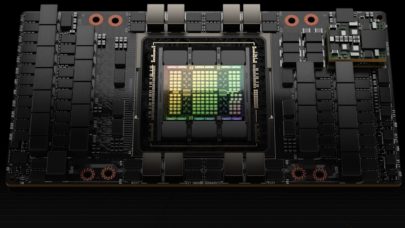
The Calxeda EnergyCore ECX-1000 Series is based on the 32-bit Cortex-A9 processor. According to ServerWatch, the “Zinc” server is comprised of 24 Calxeda 4-core SOCs for a total of 96 cores, delivering 4 GB of RAM per node (96GB total). As for storage, there are 24 x 500GB SATA drives, and the nodes are connected with 10GbE links.
Beyond the hardware donation, Dell and Calxeda will also provide hosting and support for the microserver. Calxeda is hosting the “Zinc” server at an Austin-based colocation facility, where it will be remotely accessible for the ASF testers. Both companies will contribute to hardware maintenance, while the ASF infrastructure team will be responsible for systems management, such as access, patches and upgrades.
Earlier this year, Dell released its ARM-based “Copper” servers to select seed customers and ecosystem partners, such as Canonical and Cloudera. Developers were given remote access to the servers through a partnership with Texas Advanced Computing Center (TACC).
As with Copper, Zinc is not generally available, but the Apache contribution will enable ecosystem development, and Dell plans to bring the chip to market at “the appropriate time.”
The Apache Software Foundation (ASF) is an all volunteer organization that oversees nearly 150 open source software projects and initiatives.