Datanami
 EnterpriseAI
 HPCwire Japan
 QCwire
 HPC & AI Wall Street
Carcinogens seem to be everywhere, from automobile exhaust to secondhand smoke. With cancer the second leading cause of death in the US, research into various carcinogens may be the first step in preventing cancer from developing. Now, with the help of researchers at NYU, HPC may give us the necessary tools to curb cancer development.
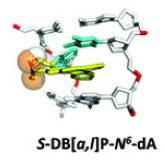 High performance computing resources help researchers model those airborne cancerous chemicals, known as polycyclic aromatic hydrocarbon (PAH), and their effect on DNA strands in human cells. Carcinogens, or chemicals that manipulate the DNA of cells in such a way that the cells replicate uncontrollably leading to tumors, can be broken into two categories. Some of these chemicals destabilize the actual DNA strands, making them easier to defend against. Others, however, actually create stronger bonds between the strands than there exists between normal DNA, making them particularly effective at propagating themselves.
As Suse Broyde, professor of biology at NYU, said, “Some lesions cause DNA to be locally destabilized, but there are lesions that actually stabilize the DNA so that the two strands come apart with great difficulty. Sometimes they’re even more stable than undamaged DNA.”
High performance computing facilitated the process of determining which carcinogens manipulated the DNA so effectively. Broyde’s lab used the Longhorn, Lonestar, and Ranger systems at the Texas Advanced Computing Center (TACC) to perform these simulations, along with resources in the Extreme Science and Engineering Discovery Environment.
The key was figuring out the Van der Waals forces, forces in chemistry which dictate how chemicals interact with each other at an atomic level. Modeling those forces would give the group insight on how a particular carcinogen moved about a strand of DNA as well as the energy involved.
“You can make movies of the dynamic trajectory which allow you to see the real mobility of the entire system,” Broyde said. This amount of resolution helps to indicate how well the particular chemical reacts with the DNA. “You can watch the DNA flexing and the backbone moving dynamically and the carcinogen moving in and out. It’s not rigid – you can see its aliveness.”
Modeling those complex forces and interactions is no small feat, as it was necessary to garner the coordinates of the structures over a period of time. Broyde’s team needed to determine the molecular dynamics. This is where TACC came in.
Using TACC’s resources, Yuqin Cai, a post-doctoral research scientist in Broyde’s lab, developed a series of computer simulations. Cai’s work combined with the HPC allowed each simulation to be properly visualized and analyzed. “The computer simulations revealed the structural, energetic and dynamic properties of the DNA containing the PAH-derived lesions,” said Broyde.
After simulating three different carcinogens in two different configurations each, Broyde’s team determined that dibenzo[a,l]pyrene was most likely to cause tumors. According to Broyde, that particular carcinogen contains a five-ring structure that lends itself to easy “stacking,” which artificially stabilizes the DNA and disarms its repair mechanism.
Determining which carcinogens pose the greatest risk is important to preventative medicine, as doctors can warn patients which chemicals they should be more cautious around, especially, as Broyde noted, in the case of smokers. The research could also lead to the development of more effective chemotherapeutic drugs.