 Datanami
 EnterpriseAI
 HPCwire Japan
 QCwire
 HPC & AI Wall Street


Parallel Perspectives: HPC Internships Educate and Inspire
As an undergraduate Sophomore at the University of Chicago, Joey Lin embarked on a journey to explore how an internship opportunity involving high-performance computing (HPC) could enhance her …
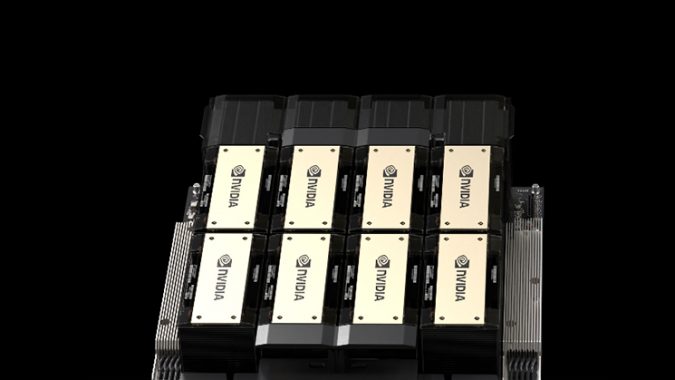
MLPerf Inference 4.0 Results Showcase GenAI; Nvidia Still Dominates
There were no startling surprises in the latest MLPerf Inference benchmark (4.0) results released yesterday. Two new workloads — Llama 2 and Stable Diffusion XL — were added to the benchmark …

HPCwire’s 2024 People to Watch
Find out which 12 HPC luminaries are being recognized this year for driving innovation within their particular fields.

AWS Reports Improved Quantum Error Correction based on Dual-rail Erasure Qubit
March 20, 2024
AWS today reported demonstrating an improved approach to quantum error correction that accounts for flip and phase errors in qubits with less overhead (redundan Read more…

The Pulse of HPC: Tracking 4.5 Million Heartbeats of 3D Coronary Flow
February 15, 2024
Working in Duke University's Randles Lab, Cyrus Tanade, a National Science Foundation graduate student fellow and Ph.D. candidate in biomedical engineering, is Read more…

Google Cloud Waives Cloud Exit Fees, Throws Down Gauntlet to AWS and Azure
January 17, 2024
In a bold move by the number three public cloud company yesterday, Google Cloud announced it will no longer charge customers extra to move their data out of its Read more…

Intel Launches Enterprise GenAI Company: Articul8
January 10, 2024
Intel and DigitalBridge, a global investment firm, launched an independent generative artificial intelligence (GenAI) company named Articul8. The platform offer Read more…

Quantum 2023-24: Five Questions to Ponder, Five Actions to Take Next Year
January 3, 2024
What a year - two new ~1000-qubit QPUs; two public Q companies have faced delisting pressure. Seems like the same boom-bust enthusiasm cycle for quantum computi Read more…
Intel’s Xeon General Manager Talks about Server Chips
January 2, 2024
Intel is talking data-center growth and is done digging graves for its dead enterprise products, including GPUs, storage, and networking products, which fell to Read more…

Google Addresses the Mysteries of Its Hypercomputer
December 28, 2023
When Google launched its Hypercomputer earlier this month (December 2023), the first reaction was, "Say what?" It turns out that the Hypercomputer is Google's t Read more…
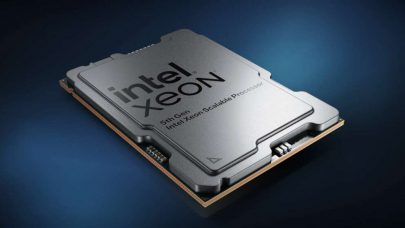
Intel Won’t Have a Xeon Max Chip with New Emerald Rapids CPU
December 14, 2023
As expected, Intel officially announced its 5th generation Xeon server chips codenamed Emerald Rapids at an event in New York City, where the focus was really o Read more…












- Click Here for More Headlines
Whitepaper
Transforming Industrial and Automotive Manufacturing
In this era, expansion in digital infrastructure capacity is inevitable. Parallel to this, climate change consciousness is also rising, making sustainability a mandatory part of the organization’s functioning. As computing workloads such as AI and HPC continue to surge, so does the energy consumption, posing environmental woes. IT departments within organizations have a crucial role in combating this challenge. They can significantly drive sustainable practices by influencing newer technologies and process adoption that aid in mitigating the effects of climate change.
While buying more sustainable IT solutions is an option, partnering with IT solutions providers, such and Lenovo and Intel, who are committed to sustainability and aiding customers in executing sustainability strategies is likely to be more impactful.
Learn how Lenovo and Intel, through their partnership, are strongly positioned to address this need with their innovations driving energy efficiency and environmental stewardship.
Download Now
Sponsored by Lenovo
Whitepaper
How Direct Liquid Cooling Improves Data Center Energy Efficiency
Data centers are experiencing increasing power consumption, space constraints and cooling demands due to the unprecedented computing power required by today’s chips and servers. HVAC cooling systems consume approximately 40% of a data center’s electricity. These systems traditionally use air conditioning, air handling and fans to cool the data center facility and IT equipment, ultimately resulting in high energy consumption and high carbon emissions. Data centers are moving to direct liquid cooled (DLC) systems to improve cooling efficiency thus lowering their PUE, operating expenses (OPEX) and carbon footprint.
This paper describes how CoolIT Systems (CoolIT) meets the need for improved energy efficiency in data centers and includes case studies that show how CoolIT’s DLC solutions improve energy efficiency, increase rack density, lower OPEX, and enable sustainability programs. CoolIT is the global market and innovation leader in scalable DLC solutions for the world’s most demanding computing environments. CoolIT’s end-to-end solutions meet the rising demand in cooling and the rising demand for energy efficiency.
Download Now
Sponsored by CoolIT
Advanced Scale Career Development & Workforce Enhancement Center
Featured Advanced Scale Jobs:
HPCwire Resource Library
HPCwire Product Showcase

© 2024 HPCwire. All Rights Reserved. A Tabor Communications Publication
HPCwire is a registered trademark of Tabor Communications, Inc. Use of this site is governed by our Terms of Use and Privacy Policy.
Reproduction in whole or in part in any form or medium without express written permission of Tabor Communications, Inc. is prohibited.